Wednesday, August 23, 2006

Low tech to high: camping and a visit to a particle accelerator


Last weekend we went camping near the town of Greenport on the North Fork of Long Island. The beaches on the North Shore are rocky, which makes the swimming experience not so enjoyable, but they were still beautiful, and especially tranquil in the late afternoon sun. We really enjoyed ourselves in the town of Greenport, quiet and charming, where people treated us in a normal, friendly manner rather than as tourists to be barely tolerated. (Greenport photos here)

Camping is easier than it used to be - our tent popped right up and we managed to set up in the evening dark without any drama. The only drama was our second night there when it bucketed down with rain! I spent much of the night waking up intermittently and wondering when the tent was going to start leaking; fortunately we only got a few sprinkles during the final downpour at about 6 am (maybe the tent had finally had enough of repelling water?). The private campground, Eastern Long Island Kampground, was full of RVs but, thank god, a lot quieter than the state park we stayed at last year (Wildwood on the North Shore).

So last year after our camping trip we decided to drop by Brookhaven National Laboratory because I had read they had tours there on certain summer Sundays. Wow, we had such a great time seeing their biology labs (DNA analysis, electron microscopes and much more) that I thought we ought to come back this year. In fact, this year we timed the camping to coincide with a visit to Brookhaven's RHIC (Relativistic Heavy Ion Collider), a particle accelerator that is currently the most powerful heavy-ion collider in the world. What does that mean, you say? Well, I don't REALLY understand the physics of it all, but if I understand correctly basically you have two tubes in which sub-atomic particles run clockwise and counter-clockwise in a big 2+ mile circle at 99.995% the speed of light. At 6 points the two tubes cross over each other and that's where the streams can intersect and the particles running in opposite directions can collide - BOOM! (Interestingly enough, there was speculation at one point that the RHIC could create a black hole or another phenomenon that would destroy the earth - Wikipedia explains). Anyway, there are detectors built at the intersection points and they record the results of the collision, teaching us a lot about -- well, about what conditions may have been like right after the Big Bang and about lots of other stuff I don't even pretend to grasp.

Even though I don't understand it, I can still be impressed with the science of it, the engineering of it (individually built circuit boards, hand coding of software, etc.) and the sheer enthusiasm of the hundreds of scientists running experments on it. In fact, what makes these visits to Brookhaven so exciting is that the tour guides are the actual scientists working on the experiments. These are not museum exhibits where you are lectured about science, this is living, breathing scientific work being conducted by brilliant and occasionally very eccentric scientists. Here I should stop and mention Dr. Achim Franz of the PHENIX experiment, who gave us a great feel for the life of a physicist - years spent designing the experiment and the detector, the work of maintaining the detector, the terabytes upon terabytes of data, the scientists all over the world who analyze the data and use the results, the time spent in committee meetings coming up with acronyms like PHENIX, and all the rest - thank you Dr. Franz!

Anyway, it was an excellent geek adventure and for anyone who's interested in science (or especially anyone who has kid(s) interested in science), I can't recommend it enough. I'm looking foward to returning next year -- maybe we'll go see the National Weather Service, and try to camp in Montauk! (more RHIC photos here )

Monday, June 19, 2006

My first youtube posting

My first youtube posting! Here's Maia and Zhanna dancing along to Takfarinas at Summerstage. And it was so easy - no wonder youtube is as popular as it is.

Anyway, the music was great - I've liked rai since I first heard it in Tunisia almost 20 years ago, and this was something related, which the program calls yal... Takfarinas' style is "a blend of Kabylian folk, French pop, flamenco, reggae and funk."

Summerstage was filled with young people dancing, drinking, and checking the scene out. I felt old. But we had a great time dancing, sweating (it was torrid), and in Maia's case, jumping, leaping, sprinting, and I don't know what else!

Thursday, June 08, 2006

Rollerblading Newbies


DSC00142
Originally uploaded by Ruru.

After all those hours at Modell's trying out rollerblades, it was finally time to put them on and give them a try! We didn't do too badly.

Staying true to form, Paul went out and skated as fast as he could around and around, and I went back and forth in front of the benches until I could sort of skate, slowly but without falling. Maia needs a little more practice but she was willing to give it a shot!

Delia, who tried out her new spiffy blades, took these photos plus many videos, which I'll try and post on YouTube.

Friday, December 16, 2005

Wikipedia vs Britannica

After all the hulabaloo about problems with Wikipedia, Nature conducts an investigation of science articles on Wikipedia and finds around 4 inaccuracies per article. However, Britannica has around 3!

OK, I know science articles may not be as controversial as other types, but this, I think, augurs well for Wikipedia in general.

Monday, December 05, 2005

I'm Yoda?!?

Which Fantasy/SciFi Character Are You?


Ok, I can't resist these little quizzes, especially when they promise to reveal which SF or fantasy character you're most like. And I actually found the questions interesting. But Yoda?!?! Why can't I be Spock? Well, I guess I can at least take comfort in the fact that I'm not Wesley.

Sunday, December 04, 2005

Alien Loves Predator


I was pointed to this series of, um, comics, by Gothamist, and I can't stop reading them! Very clever use of dolls (excuse me, action figures), sets and Photoshop - I love seeing alien and predator on the subway. Besides as the subtitle (In New York, no one can hear you scream) tells you, it's all about the two protagonists' life in New York: waiting for subway trains, living in a small apartment (Alien to his mom: "Ma, you're like 20 feet tall. It's not my fault you didn't fit through the door" Mom: "Are you saying I need to lose weight?"), dating and lusting, etc.

And, it's way more interesting than the one Aliens vs. Predator novel I read (I was desperate for English-language reading material in a foreign country)!

Wednesday, November 16, 2005

"Career-Killing Blogs" for Academics

An interesting article in Slate on what blogging means for academics, especially when tenure time comes around. The gist of it is that the academy doesn't know how to assess blogs when reviewing one's academic record (heck, they don't even know how to give marks for teaching online or using technology well in the classroom). However, the article suggests that blogs could perhaps become truly peer-reviewed publications, just as rigorous but more accessible than articles published in scholarly journals. The most intriguing idea is how to set up a peer-review system like that of slashdot or ebay. It might take time (think about how little some academics use technology in professional life as it is), but it could work! Seems like the Public Library of Science that the article mentions is a step in the right direction.

Wednesday, November 02, 2005

Freakonomics

Just finished reading Freakonomics; it's a really fast read, plus I've read so many excerpts from it in various sources that it felt more like re-reading! In its eminent readableness it reminded me of Blink, and whaddaya know, the author of Blink, Malcolm Gladwell, has a little blurb on Freakonomics' cover, "Prepare to be dazzled".

Anyway, well worth a read, shows how analyzing data can lead to some very surprising conclusions. The authors talk about how their results can overturn conventional wisdom (a phrase coined by John Kenneth Galbraith), which is "simple, convenient, comfortable, and comforting - though not necessarily true". Me, I find it more comforting to see the conclusions reached by data analysis, but I'm a geek.

However, I wonder about the use of regression analysis. I understand the basic concept, but it terms of how it really works, it might as well be magic to me. I remember reading Stephen Jay Gould's The Mismeasure of Man (what an exciting book, his humanist passion shone brightly through), in which, if I remember correctly, he talks about how measures of intelligence use flawed analyses (regression analysis? factor analysis? must reread!). Well, I followed along but ultimately I didn't have enough expertise to judge whether there were flaws in his argument. I had the same feeling of slight discomfort here - it sounded good, and made sense, but ultimately I took the authors'word for it.

Monday, August 22, 2005

A picture from Alaska

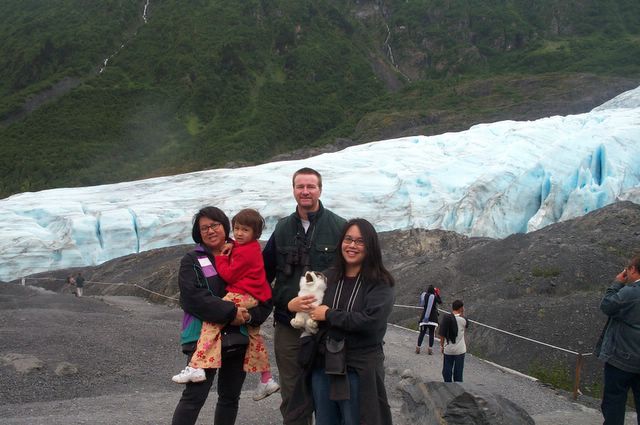
Just thought I'd try using Hello to send a photo to Blogger - seems to have worked! We're coming up on our last days in Alaska, on to Vancouver next for a few days before coming home. Alaska has been absolutely gorgeous - as beautiful as they all say it is. Staring at the screen is starting to make me feel a little nauseous, however, because I still feel as if I'm rocking back and forth on the ship!


In front of Exit Glacier Posted by Picasa

Wednesday, May 04, 2005

QuizFarm.com

Two fun quizzes from QuizFarm!

1. Which Disney Princess Are You?

(Thank god I'm not Snow White!)
You scored as Belle. You are Belle!

Belle

93%

Mulan

73%

Jasmine

47%

Ariel

37%

Pocahontas

37%

Snow White

33%

Sleeping Beauty

20%

Cinderella

14%


2. Which Neighborhood in Manhattan is Best for You?


(Yikes, but I live in Inwood!)
You scored as China Town.-Susan

China Town

72%

Hell’s Kitchen/ Theatre District

61%

Alphabet City

50%

Stuyvesant Town

50%

El Barrio

45%

SoHo/ TriBeCa

45%

Kips Bay

44%

Financial District/Battery Park

44%

Chelsea

39%

Inwood

39%

Harlem

39%

Upper West Side/ Morningside Heights

39%

Upper East Side

17%

Washington Heights

6%

Which neighborhood in Manhattan is best for you?
created with QuizFarm.com

Tuesday, April 19, 2005

Catholics and Sci-fi

Looks like we're got a new pope, and a conversative one, too. Hmm, if I were an American Catholic, I'd be frustrated.

Anyway, all the talk about the conclave and secret voting brought back strong memories of the reborn Catholic church depicted in Dan Simmon's Endymion series - the depiction of rituals, power, secrecy, and all that was just perfect. What a great series that was too, even better than the Hyperion series, to which it was a sequel.

My sister tells me to try the Sparrow series by Mary Doria Russell, which is about Jesuits and aliens - sounds good! I've put it on reserve at the NYPL.

Friday, March 25, 2005

Robot Stories, by Greg Pak

This is a DVD, not a book, but it reminds me a lot of sci-fi stories that I've read and liked. The 4 separate stories are so refreshing, in that they have really no special effects at all - when was the last time we saw a science fiction movie like that? Even The Lathe of Heaven (new version) had a substantial budget for scenery, costumes and props, to make you feel like you were living in the future.

In contrast, Robot Stories have a speculative premise - what if... - and then uses it to explore themes of love, help, spirit, life, etc. It was by no means perfect, but it reminds me of the science fiction that I like best.

The short film format was also refreshing - kind of like having tapas instead of a big meal - , and lastly, I can't help but like the opportunity it gave to talented but under-used Asian-American actors.

What I'm reading now: Quicksilver, in e-book edition, yay! I started this in hardback but there was no way I was dragging that huge tome on the subway and in my backpack everyday, so I had to sneak in pages here and there before going to bed. I only got 1/3 of the way through it before my 21 days at the libary were up. So I grumbled to myself, why don't they have this as an e-book, and lo and behold, they did, at the NYPL! I can't rave enough about how much I love reading e-books on my new Palm (Sony TH55), and about how brilliant the NYPL is to offer e-books (though they need more)!

Wednesday, March 16, 2005

Tech Nightmares

OK, I've decided that I'm going about this blog thing the wrong way. I read somewhere recently that you've got to blog at the moment, not wait until later, and I think that's my problem. I find it hard to write quickly (I reread and revise constantly), so I always figure I'll write about something later, when I have the time... and I end up posting once every few months! So here goes...

I HATE TECHNOLOGY at the moment. First we come back from a nice weekend in Philadelphia to find no DSL connection. I spend hours on the phone with Verizon tech support, who finally decide that my modem is screwed, and out of warrantly. So instead of paying $80+ for a new modem, I thank god that I had already decided to switch to Earthlink. Unfortunately, it takes a while for their modem to reach us...

We use a neighbor's wireless for a week (thank you belkin54g!), hoping he/she doesn't mind too much. Feel guilty that I never leave my wireless open in return.

Earthlink comes, yay! Takes me 2 hours to set up modem and wireless. I'm not sure what I did in the end, but it worked. Hmm, doesn't say much for my techabilities.

Then last night, outgoing email is not being sent. I use both verizon and earthlink's smtp servers, and no luck with either. In fact, every time I try to connect to the smtp servers, I get booted off earthlink! I mean, what is up with that?! I try pinging the server's IP addresses but guess what, I can't ping any IP address I try (I know 2 of the ones at BMCC). What's up with that? I'm puzzled, frustrated, can't stop thinking about it as I go to bed.

I go to the office and try the smtp servers via Mozilla's Thunderbird on my office computer and it's smooth sailing. Hmmph. I don't want to go home and tackle the problem again.

And hence my complaint - I feel like I'm spending hours wrestling with technology every day when I get home. This is a quality of life issue for me! This is not the promised land! Take all the computers and gadgets back!

What I'm reading now: lots of books about Alaska, planning our family trip there in August. The Listeners, by James Gunn - slow and somewhat socially dated sci-fi about searching for ET life. Reading on ebook format. Also finished on ebook Bimbos of the Death Sun, by Sharyn McCrumb. Comic murder mystery at a sci-fi convention. Stereotyped fans too stereotypical to be funny.

Friday, January 21, 2005

Breaking the Maya Code, by Michael D. Coe


Well, I've just about finished this book, which I got off my sister, who had to read it for a college course. What a fun read! I remember looking at all the stelae and other carvings when we went to Tikal and Copan some years ago - now I finally have an idea how the written language worked.

I remember way back when I was younger that there was this general impression that the Maya were peaceful, especially in comparison to the bloody Aztecs, but it turns out that the Maya city-states were pretty often warring with each other, getting (and sacrificing) captives was a big thing, and leaders had lots of blood-letting ceremonies (tongues and penises). Mmm, not so peaceful after all. Besides which, the Mayan glyphs have really ferocious looking figures! I mean, look at these guys:


It took a while for people to figure out that the written language was what Coe terms "logographic", like Chinese, Ancient Egyptian and Sumerian. Logographic systems are a mixture of logograms (symbols that indicate meaning) and phonetic signs. Like in Chinese where the radical often gives a general category or meaning to the character, while the other parts indicate how it's pronounced. I never knew Maya was like Chinese!

Coe gives a general overview of writing systems, and then traces the entire history of Western attempts to decipher Maya writing to the present. The history is pretty riveting, but sometimes one white male explorer blended into the next - it was much easier to remember who the few women were! (And the few, but key Russians) The other interesting thing about this book is that he takes a personal tone sometimes, excoriating certain explorers or academics for behavior that he finds obstructionist or ignorant. Coe also knows a lot of the more recent figures, so he gives his personal perspective on them, not something we usually read in books written by academics. That threw me off a little, but in general his tone is such that he really keeps you excited and, believe it or not, on the edge of your seat, waiting to see what the next great discovery will be.

One of the best non-fiction reads I've had in a while!

Friday, January 14, 2005

OK, thanks to Joe, I have now found my place in the continuum of nerdiness:

I guess I'm in that middle ground where I'm not proud to be a nerd, but I've got enough nerdiness that I can't mock it! And why is it cool to be a geek, but not cool to be a nerd?

Thursday, December 30, 2004

The Jane Austen Book Club, The Egyptologist

Still playing catch-up now, remembering stuff I've been reading...

The Jane Austen Book Club, by Karen Joy Fowler

So I went out and read The Jane Austen Book Club. I don't read much contemporary mainstream fiction anymore because I tend to find it unimpressive, but I love Austen, re-read her every decade or so, and thought this sounded pretty good. And it was, well, pretty good, nothing great. In fact, I thought it was kind of cute but, blah, - what was all the fuss about? I scoured some reviews to see if anyone agreed with me - learned that Karen Joy Fowler writes science fiction too - found that Meghan O'Rourke and Stephen Metcalf at Slate had the same reaction as me. Didn't know that Oprah had chosen Anna Karenina for her book club; wonder how that went.

The Egyptologist, by Arthur Phillips

Went and got this from the library, don't remember why, I think I must have read something about "one of the few contemporary novels in epistolary form", plus it was a mystery, so hey, why not? Like The Jane Austen Book Club, it has some clever writing, but not much else going for it. Two unreliable narrators sort of interest you in trying to figure out what's really going on, but you figure it out about half way through the book (though I may be slow - I'm one of those mystery readers who usually doesn't know whodunit until it's revealed by the author). I sort of kept reading to the end because there was one little inconsistency I couldn't figure out. Otherwise, I don't know if I would have stuck with it because the main characters are only mildly interesting, the secondary characters are leaden caricatures though they're supposed to be comic caricatures, and the antiquated style of the letter-writing is grating. Having said all that, some of the black comedy works well and the main character's slanted reporting of Howard Carter's "trivial" Tutankhamen find is hilarious.


Well, that's it for my disappointing little foray into the mainstream. I'm going back to my science fiction staples after this. At least genre fiction, when it's bad, can have interesting ideas to redeem it. In fact, I'm trying to think back to the last contemporary non-sci-fi novel I really, really loved. It couldn't have been as far back as A Suitable Boy, could it? Geez. The NY Public Libary probably has a record of all the books I've ever taken out; it's too bad I can't get access to it! Though I wonder if, for privacy, they purge each record after I've returned the book? I must ask them the next time I'm in a branch...

Wednesday, December 29, 2004

A Brief Tour of Human Consciousness, Blind Lake

Well, I was in the library the other day and I saw a very interesting book on the shelf, picked it up, realized a split second later that I'd read it few months ago - so I said, hmm, I really want to use my blog to at least remember what I read! So, here goes, just some books that I've been reading since I last posted 5 (!) months ago.

A Brief Tour of Human Consciousness, by V. S. Ramachandran


My dad kept quoting the ideas in this book. At first I was reluctant, because the last book he got me into (Life's Solution: Inevitable Humans in a Lonely Universe) turned out to be, well, too much of a slog. But this was turned out to be a real breeze, the neuroscientist author talking about peculiarities of the human mind and cases of rare neurological disorders and what they might teach us about how the mind works. Yes, a lot like some of Oliver Sacks' stuff, but still fun to read.

Most interesting is how scientists set up truly ingenious experiments to try to test certain neurological functions (using a mirror to trick the mind into thinking a paralyzed limb is moving, for example). Also, the part on synesthesia (cross-referencing perceptions, like seeing colors in numbers or sensing tastes in shapes) leads to an interesting suggestion on how metaphor may be a form of synesthesia. The part on neurological bases of art (neurasthetics, he calls it) is a bit iffy but the final part on meta-representation (the brain makes representations of what happens in the world but it takes meta-representation to make conscious interpretation of these representations) rings true. A short and easy-to-read book, but by the time I finished, I felt I got more out of it than from other, "heavier" books.

Blind Lake, by Robert Charles Wilson

Ok, now this is the book that I picked up off the shelf and realized that I had already read and enjoyed! This is the second book I've read by Wilson, and I found it a lot better than the first one (Chronoliths). While Chronoliths had great momentum and a very interesting premise (gigantic monuments appear, apparently having been sent back in time by a future megalomaniac ruler), it really petered out at the end for me.

Blind Lake was equally intriguing (possibly sentient computers record observations of truly alien life that scientists try to interpret) and held its own all the way to a gripping ending. The various threads (are the computers sentient and how are they actually getting these observations? are the aliens real and what do their actions signify? how do scientists grapple with subjectivity? why has the observation station been completely isolated and how does the society of scientists and administrators deal with it? does the 9-year old girl with a tenuous relationship with reality actually touch upon a deeper reality?) are developed well and the characters are interesting. Really a recommended read.

Saturday, July 31, 2004

"Dear John" with PowerPoint

OK, of all our complaints about how PowerPoint can be misused, this one (via BoingBoing) has got to take the cake!

Monday, June 21, 2004

Out in Space!

"Thirty years ago if you had asked NASA - and people did in those days - `How long would it be before I could buy tickets to space?' the answer was, `About 30 years.' If you ask today, you'll get about the same answer, 30 years. I think that's unfortunate."

Well, at least while we're waiting we can see a bit of progress! Although really, it's about time, I'm still majorly excited to hear that a private team led by Burt Rutan (quoted above) finally went past the 100 km line into "space"! The test pilot, Michael W. Melvill, opened a bag of M&Ms and watched them float! That's what I want to do - go out into space and float M&Ms :-). I think my dream of seeing earth from orbit before I die may be possible after all.

Which reminds me, I saw The Day After Tomorrow at the cinema over the weekend and really, the most gorgeous parts of it were the (mock) pictures of storm systems from orbit - absolutely, dazzlingly gorgeous. Watching multiple tornados hit LA was enjoyable, too :-). Silly movie, but if you don't take it seriously and you have someone (my sister in my case) watching and making snide comments on it together with you it's great fun.

Friday, May 07, 2004

Education today, Clades

I was reading the Education section of the NYTimes the other week and two things struck me, hard!

The first was about the pressure that high schoolers and even younger kids feel about getting into the "right college" and doing all the right things. I guess it's one of those "Gee, when I was a kid, we never had..." sort of moments because, I swear, even in fairly competitive northern New Jersey we didn't stress out THAT much about getting into the right college. Apparently everyone also preps for the SATs nowadays, whereas we used to make fun of the kids who studied hard for the SAT (a little light reviewing of vocabulary lists was ok though).

Then there was the article about parents starting their kids late in school, so that they'd be developmentally and intellectually ahead of the other kids in their grade. Sounds kind of unhealthy, if not a little sick, to me. But then again, I don't seem to be a very driven parent.

I read a little article the other day (was it on Salon?) that made me feel better. It was in reference to a book about how consumers who don't obsess about making the "perfect" purchase, but rather accept a "good-enough" selection, in today's world of overabundant consumer choices might be happier (or at least less stressed). Then the (column) author says that with your kids, maybe "good enough" isn't acceptable; after all, we all say we want "the best" for our children. However, do parents who spend so much time seeking out "the best" for their kids, end up actually spending less time with their kids? Well,I thought the author made a good point, though maybe I'm just happy to feel less guilty since I try to fall on the "good enough" side of things with Maia. I figure that, after all, I turned out ok, right?

Anyway, the second thing that struck me in the Education section was from an article about online learning, particularly for graduate studies. Many people who don't think it's "as good" as face to face learning claim that you can't have the same kind of (and, by implilcation, equally satisfying) interaction . Well, it's certainly true that the interaction is not the same, but anyone who's every participated in an online class knows that the interaction is very intense, very close, though differently "flavored". I think it's obvious that the people saying this have never been involved in an online class in any way.

All right, running out of time but I did want to mention one other book I read, Clade, by Mark Budz. My first time reading him, and it was pretty pleasurable. The story wasn't much, and I'm not sure I really understood what happened in the end, but the description of near-future post-ecocaust Earth was really fantastic.

So, after most of the enrivonment is destroyed, genengineered flora and fauna (umbrella palms to deal with the uv, etc.) now populate most of the earth. However, humans have also been genegineered to survive, and people modify themselves so that they can fit into their restricted environments. Moreover, all the divisions of class, culture, ethnicity, have been codified into biochemical signatures. Now, if you go into a group/area where you don't belong (you're not "claded"), you smell and taste bad things, feel sick, etc. It certainly makes security easier (if you haven't been claded for that expensive condo, you get hives as soon as you step into the lobby)!

Also, the two protagonists, who are lower-class (clade?) people trying to get by, move on up in the world, are very well drawn, feel authentic. Too bad the plot's a bit of a shambles. Anyway, it's always fun to read near-future stories and I think this one handles the combination of familiar and strange very well; I'll read more by this author for sure.